Compact Tractor Rental
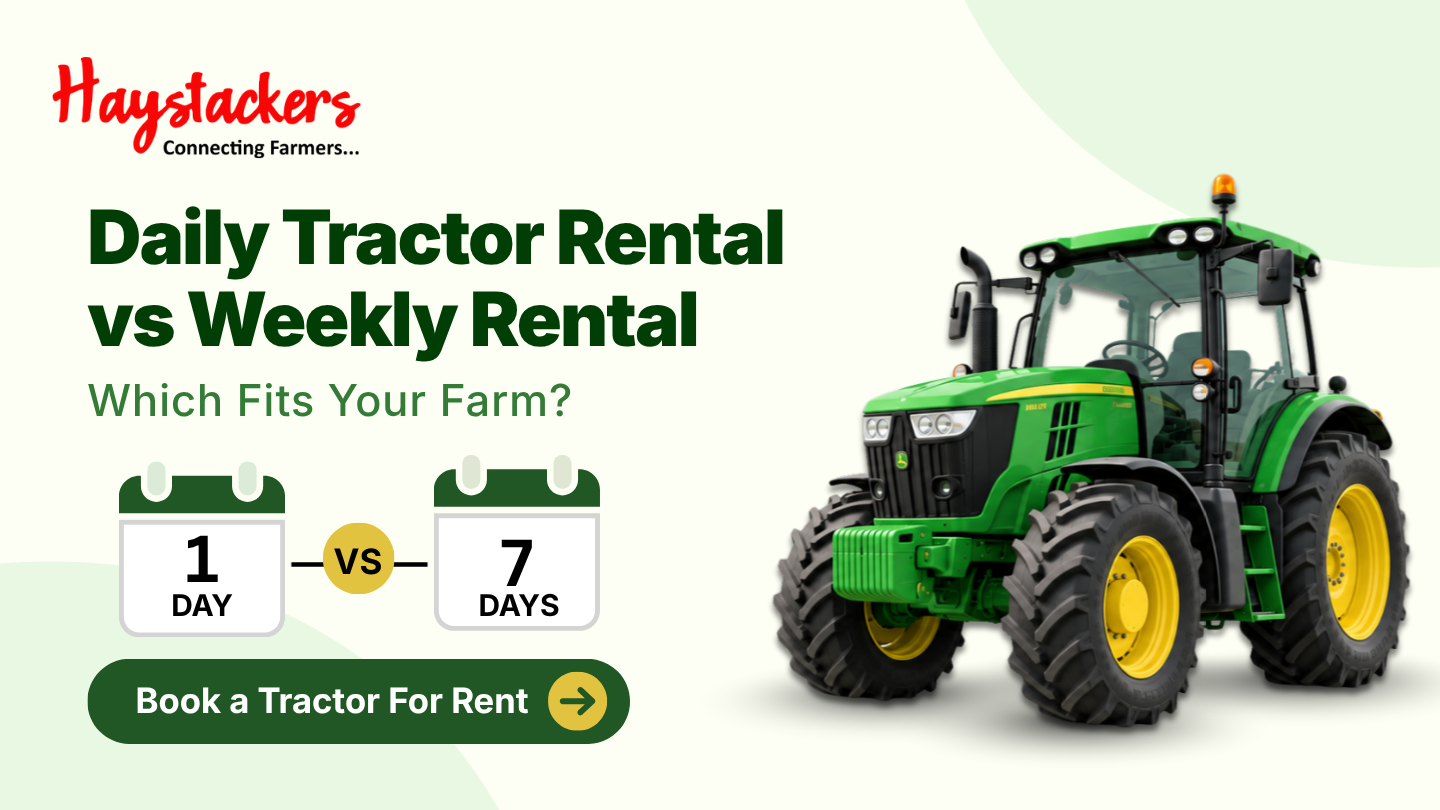
Pick a one-day booking when the job wraps up quickly,
and switch to the weekly option once the work stretches toward a fourth
session. This guide compares typical US cost ranges, machine-hour limits,
weather risk, and add-on charges so you can match the duration to your task. A
brief checklist near the end helps you decide fast.
Most growers know exactly which chore needs a machine,
yet few know how long to keep it. Book too briefly and you scramble for an
extension while the forecast turns. Book too long and you pay for idle iron.
With farm equipment rental in US markets now spread across
dealers, yards, and peer marketplaces, the pricing tiers can look confusing. Ever
wondered why the size of a vehicle can affect your final cost more than the
brand? Well, here's the deal: we will analyze typical costs, break-even
calculations, hidden limits, and real-world examples to get you covered whether
you are a rookie or a pro.
Owners set a daily figure for short jobs, then discount the seven-day amount to keep machines working. Renters can expect a full-season rental to cost about three to four times more than a short-term rental. That means every extra outing inside the same hire costs far less than the opener.
Duration also decides how much running time you get. A
standard single-shift agreement often includes eight engine hours, while a
week-long version usually covers forty. Go beyond that, and some owners bill an
eighth of the base amount for every additional hour.
Here is a real snapshot. One national marketplace reports average tractor charges of $300 per day and $955 per week. That bundle works out to roughly $136 apiece, less than half the quick-turn figure. Divide $955 by $300 and you get 3.2, so the fourth booked session is where the extended option starts to win.
| Machine Class | Typical daily cost | Typical weekly cost |
| Compact, 25 to 45 HP | $200 to $400 | $600 to $1,200 |
| Utility, 45 to 100 HP | $350 to $700 | $1,000 to $2,500 |
When you compare tractor rental services in US
regions, request both quotes side by side, because a low headline can hide an
expensive seventh outing. How about those loaders, mowers, tillers, and other
turf equipment you use? You can expect $50 to $200 additional on top of your
estimate. Envision a utility unit running you $500 for one day and $1,500 for a
week. Four working stints cost $2,000 at the daily rate, so the bigger quote
saves $500 and leaves breathing room for surprises.
A one-day booking suits tightly scoped work. Think of regrading a ranch lane, hauling round bales to winter pasture, digging post holes, or mowing a small hay plot before rain. If you can finish within eight engine hours, a longer contract only buys idle time.
Testing an unfamiliar model also fits here. An
afternoon with a compact unit shows whether its lift capacity and turning
radius truly suit your barn or orchard rows. Small operations benefit most.
USDA's 2022 census counted 1.9 million US farms, and about 74 percent of them
sold $50,000 or less, a scale that rarely needs iron for lengthy stretches.
Lean toward extra time for anything weather-dependent or staged: spring tillage across several fields, seedbed prep followed by planting, baling between cuttings, or autumn cleanup. Rain can erase two workable sessions, and a locked-in charge caps that risk. Extensions are never guaranteed either, since another farmer may already hold the next slot.
A longer window helps first-timers too. Anyone who can rent agriculture machineries online in US regions gets an opportunity for a shakedown pass, a fluid check, and a few owner questions before serious work begins. That calm start prevents costly mistakes on unfamiliar controls.
Match Your Sessions to the Right Time Frame in Five Steps
Answer these before you confirm anything:
1. How long is the field work? Up to three sessions favors daily and four or more favors weekly.
2. What does the forecast say? Wet ground or shaky skies call for a cushion.
3. How many engine hours will you log? Past eight per outing, check overtime clauses or step up.
4. Who handles transport? Paying delivery and pickup fees once beats paying them twice.
5. How firm is your budget? A locked-in amount protects you from extension surprises.
Tally your answers. When two or more point toward the bigger block, book it. When they split, ask the owner whether a short contract can convert midstream, since many yards allow that only if you call before the first period expires.
The five checks are identical, but I rephrased each
label into a question, making the paragraph closer to a dialogue. I also
swapped the word "weather exposure" with "forecast" to get
rid of another repetition. The keyword spacing is unchanged, since none of the
three keywords sit in this section.
Confused by Rental Agreements? Rental agreements are often tricky, between delivery fees, fuel and maintenance stipulations, what you're covered with insurance, required deposits, and what happens if you're late returning an item. Please note that some rentals are billed by calendar day. If you pick up on Thursday at 10 AM, the rental ends Thursday, so plan to return it that morning.
Compact tractor models weigh anywhere between 3,000
and 5,000 pounds, and utility models start at 5,000 pounds and go over 10,000
pounds, so you'll want to have a correctly rated tow vehicle and trailer unless
you are having it delivered.
Ever considered borrowing rather than buying it? Haystackers is the P2P market to do that. You choose your start and end dates, filter listings by location, and browse prices before making a request. Tractors begin at $150 a day with pickup or delivery options.
Protection matters when plans shift. Bookings carry
episodic insurance, and a 24-hour change-of-mind window returns your payment
minus the card fee. If rain resets your calendar, the owner can approve a date
change. Treat it as a comparison tool first and a checkout second.
Planting and harvest windows can shrink to a handful
of weeks, and local yards fill early. Browse listings a month ahead, save two
or three options, and confirm the plan with each owner. Want the full picture
of how it works? Know About farm equipment's rental in Online.
Hire quickly for fieldwork that will wrap up within a couple of sessions.pick the week-long plan when work needs three or more, spans several fields, or depends on the weather. At the national averages above, the longer option starts saving money on the fourth booked session, and its forty included hours usually stretch further than a single outing ever will. Check hour limits, delivery charges, and conversion options before you sign, then save a backup listing so a breakdown never stalls your season. Ready to lock in your dates?
👉Skip
the Purchase, Rent a Tractor on Haystackers
1. How many days make the weekly option cheaper than stacking short hires?
A: Usually four. With national averages of $300 for a brief hire and $955 for seven days, the extended option wins once you need more than three sessions. Ask for both quotes, since some providers price it so four to five days at the daily rate equals or exceeds the weekly price.
2. Can I start small and upgrade midway?
A: Often yes, but not always. Ask before the initial period ends and confirm in writing whether your earlier payment counts toward the extension. On the platform, date changes need owner approval, so message early.
3. Does bad weather pause the clock?
A: Rarely. Contracts run on the calendar, so a soggy Tuesday still counts. That is why the added cushion suits fieldwork: it costs less than a second contract. Ask about extension charges and hour allowances before you confirm.
More articles
Thursday | Jul 30, 2026
The Future of Tractor Rental in Smart Agriculture: Everything Farmers Need to Know
Examine how the future of smart agriculture is being shaped by tractor rentals. Discover the advantages, newest developments, and ways that farmers can obtain cutting-edge equipment without having to pay for it.
Read Article





Haystackers is a peer to peer community-based platform facilitating direct rentals of tractors and farm equipment from individual farmers to those in need.
© Copyright 2026. Haystackers. All Rights Reserved.


© Copyright 2026. Haystackers. All Rights Reserved.