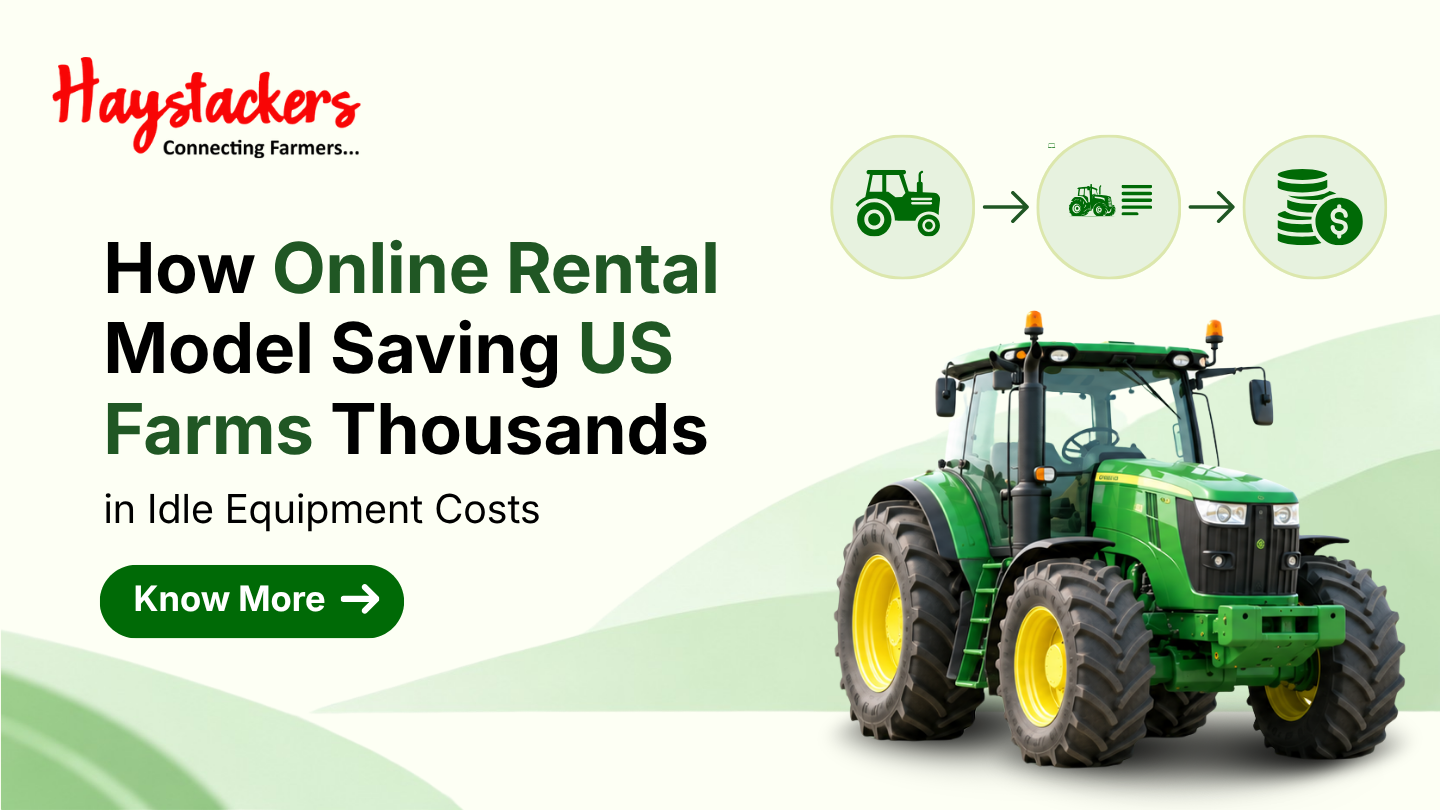
Farm Equipment Rentals
Idle tractors and implements quietly drain thousands
of dollars from American farm budgets every year through depreciation,
insurance, and storage. Online peer-to-peer platforms are changing that math by
letting farmers borrow exactly what they need, exactly when they need it. This
blog breaks down the real cost of sitting gear, compares owning versus
borrowing, and shows how digital marketplaces like Haystackers are helping US
farms cut waste and protect margins.
In spring and fall of every year, thousands of family
farms throughout the US confront the same question: purchase another tractor or
implement, only to leave it sitting for most of the year, or put off the work.
Iron that doesn't move isn't sitting harmless. If it's sitting idle in a shed,
it quietly chips away at profit margin through depreciation, insurance, and
storage. Many owners assume buying is the only path to reliability, while
checking tractor rental prices in US marketplaces feels like a
last resort. This blog looks at what idle assets really cost, how the online
borrowing model is closing that gap, and what farmers should weigh before their
next big purchase.
Recent industry research pegs the average US farm's annual spend on devices and upkeep at nearly $199,709, with about $74,957 going to repairs and another $54,089 lost purely to depreciation. In machine-heavy regions like the Northern Great Plains, farms carry more than $304,000 in tied-up assets, much of it sitting unused for long stretches of the year. Ownership costs alone can run 10 to 20 percent of an asset's original price every year in interest, insurance, taxes, and housing.
A $120,000 combine used for three weeks of harvest can
still cost its owner $12,000 to $18,000 a year in depreciation and fixed costs,
whether it cuts one acre or a thousand. That's the hidden price of buying
"just in case."
Instead of financing another shed full of steel, a growing number of US operators now go online to borrow exactly what a job calls for. A neighbor two counties over might have a planter or loader sitting idle for eleven months of the year; a digital marketplace simply connects that idle asset to a farmer who needs it for two weeks. This peer-to-peer model turns dead capital into working capital for one side and saves a major cash outlay for the other.
The appeal isn't only financial. They can use more
recent machines and tools that wouldn't make sense to purchase just for
themselves, like a GPS-guided planter used only for a narrow season.
| Decision Factor | Buying Outright | Borrowing Online |
| Upfront Cash | $40,000 to $400,000 + per machinery | Daily or weekly fee only |
| Depreciation | 10-20% of value lost yearly | None, since you never own the asset. |
| Storage & Security | Annual expense | Usage-based payment |
| Repairs | Owner’s full responsibility | Often handled by the owner-lister |
| Best Fit | Machinery used 200+ hours | Seasonal, occasional, or one-off jobs |
| Access to newer models | Limited by budget | Wide range swap as needed |
A good general rule of thumb is that if a device is
going to be logging more than 200 hours of work a year on your own ground,
ownership is almost always going to work out more favorably. Devices that will
be used for a couple of weeks a season, for a single project, or for a crop you
grow sporadically, more often than not, benefit from being an online asset
first.
It isn't only the big-ticket combine or planter
driving up costs. A single bale spear, tiller, or box blade can run $2,000 to
$8,000 to buy outright, yet get used for a handful of days each year. Searching
for tractor attachment rental in US listings lets a farmer
grab a loader bucket for a Tuesday afternoon and hand it back Wednesday,
instead of another tool sitting in the barn for the next eleven months.
Farmers using shared-use platforms report trimming
their annual outlay on farming tools by 20 to 40 percent compared with buying
every implement themselves. A 500-acre row crop farm that once carried $60,000
in loan payments on a tillage tractor can instead spend $3,000 to $5,000
borrowing one for the six-week window it's actually needed. Smaller and
beginning farmers benefit the most, since they can plant, cultivate, and
harvest with the same caliber of machinery as larger neighbors, paying only for
the days the job actually takes.
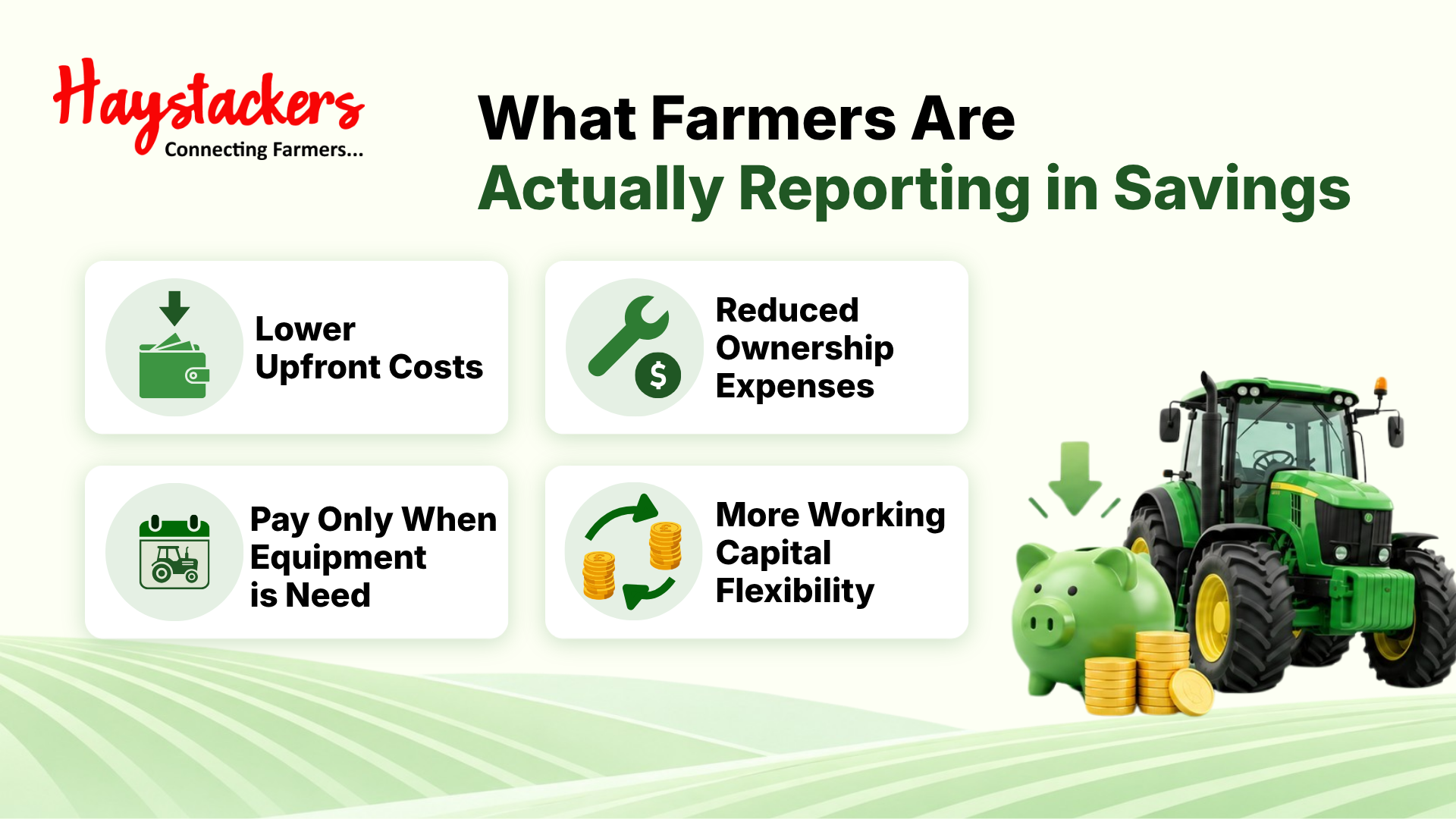
Small Tractor Rental
This is exactly the gap platforms like Haystackers were built to close. Rather than another catalog to scroll, this peer-to-peer community platform connects farmers directly with neighboring owners across agricultural zones from Iowa to the Texas Panhandle, with tractors starting around $150 a day and specialty tools listed by the day as well.
Every booking includes coverage and verified listings,
so a farmer searching for rental farm equipment in US zones
isn't gambling on a stranger's used loader. Owners, in the meantime, convert
dormant equipment into a secondary source of income of sometimes tens of
thousands of dollars a year. It does not substitute solid farm decision-making;
it just adds one more thing to do before you write a significant check.
Haystackers makes renting or borrowing equipment simple and secure. Every booking includes insurance, and every owner is verified with a credit card and account checks - so you can trust every listing.
Research delivery as well-some owners will leave it at the gate, others expect you to move it yourself. Pricing transparency matters, as well-the daily rate should be the total, not a number that increases when those surprise fees hit at pickup. Also confirm the site actually has listings in your county - a big national name isn't much help if it only covers your area with a handful of them.
Running through these points before booking helps
farms avoid the two most common headaches: surprise fees and a no-show owner
during a tight planting window.
If you are a farmer who owns a tractor, loader, or
planter and leaves it parked most of the year, listing costs you nothing and
puts it to work for someone else earning money for you. To help you get
started, learn more to list your equipment and how the process
works, what protection is available, and how long it takes to get your first
booking.
Idle tractors and implements are one of the quietest cost leaks on any US farm, adding up to thousands of dollars a year in depreciation, storage, and coverage that never touches the soil. Compare hours of real use to the reality of owning; then get on a trusted online market for high- and low-season work. Protect margins without losing capabilities either – whether you rent your own planter for six weeks or have a tractor sitting in your shed. The smarter option is usually just a few clicks away.
Ready to earn more? List your equipment
today.
1. How much can a farmer save by borrowing instead of buying a tractor?
A: A tractor that costs approximately $12,000 to $18,000 a year to own can often be borrowed for the exact weeks needed for $1,500 to $4,000, depending on horsepower and duration.
2. Can beginning farmers with no owned assets get reliable access during peak season?
A: Yes. Since listings span multiple counties and crop types, a first-year farmer can usually find a planter or tillage tool nearby even during the busiest weeks, something that was harder before online marketplaces existed.
3. Can an owner list a tractor and still use it themselves during the season?
Yes. Owners set their own available dates, so a tractor can be listed only for the months it would otherwise sit idle, such as after harvest, while staying free for the owner's own fieldwork the rest of the year.
More articles
Friday | Aug 7, 2026
The Future of Agriculture With Smart Farming Technologies in USA: Know More
Learn how smart farming technology are changing American agriculture. Find out more about how technology, precision farming, and sustainable solutions will affect food production in the future.
Read Article





Haystackers is a peer to peer community-based platform facilitating direct rentals of tractors and farm equipment from individual farmers to those in need.
© Copyright 2026. Haystackers. All Rights Reserved.


© Copyright 2026. Haystackers. All Rights Reserved.